Drag to orbit
03 · Mar–May 2026
Travel Xylophone
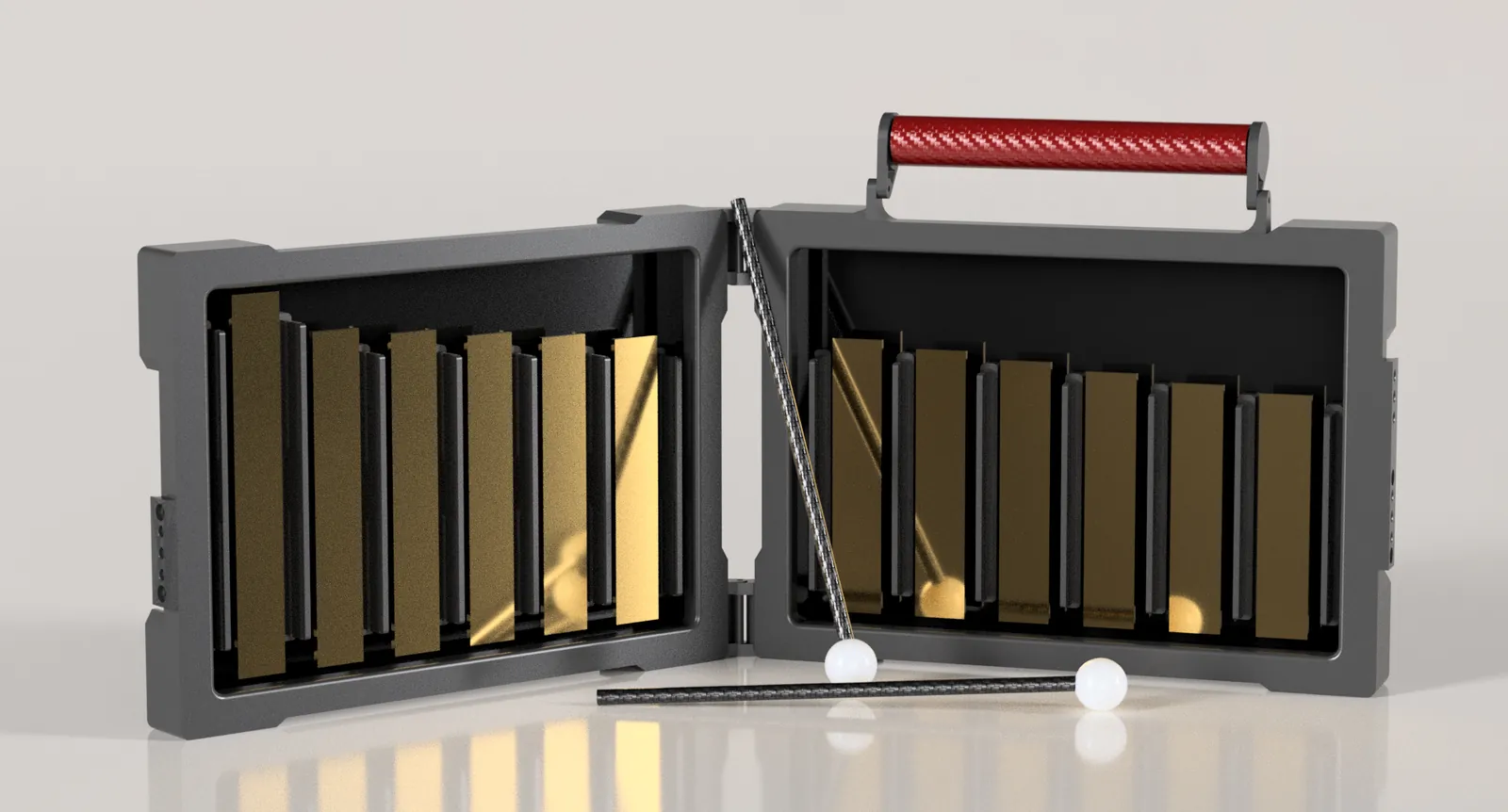
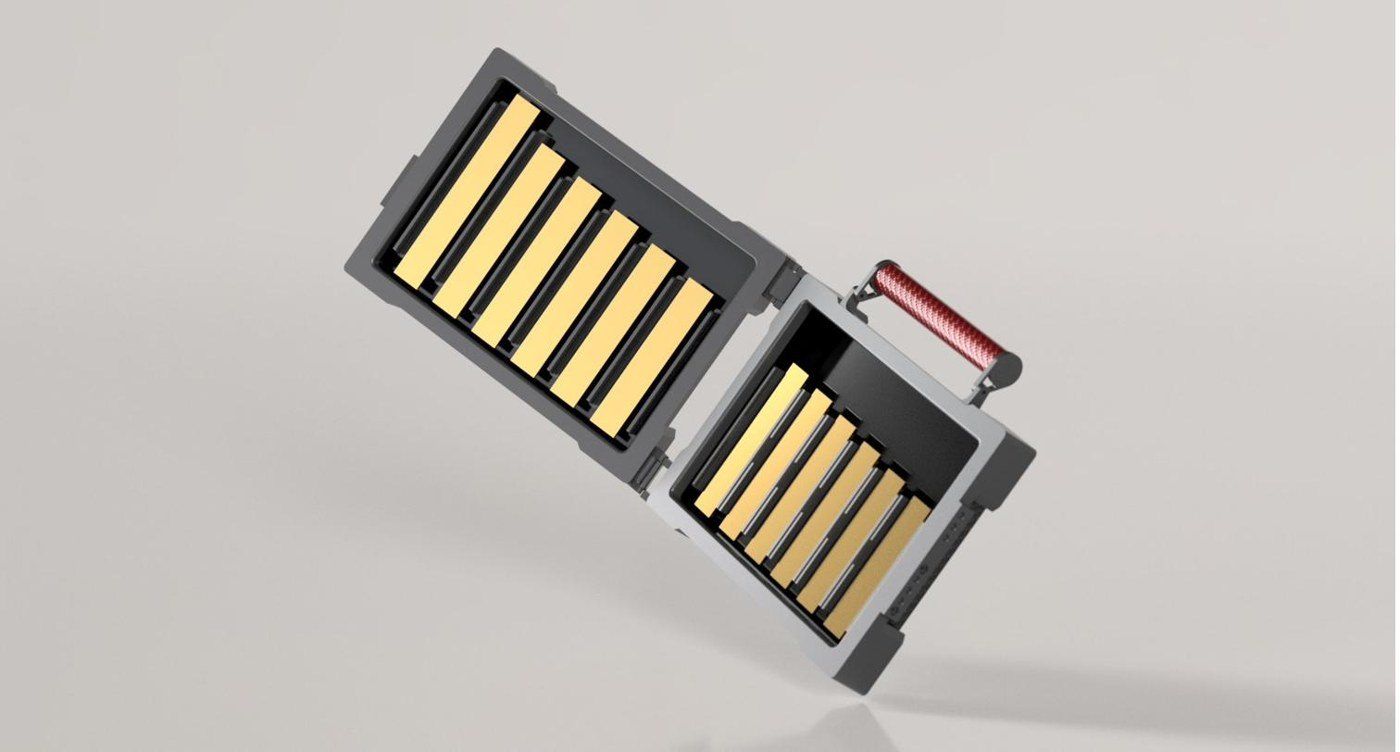
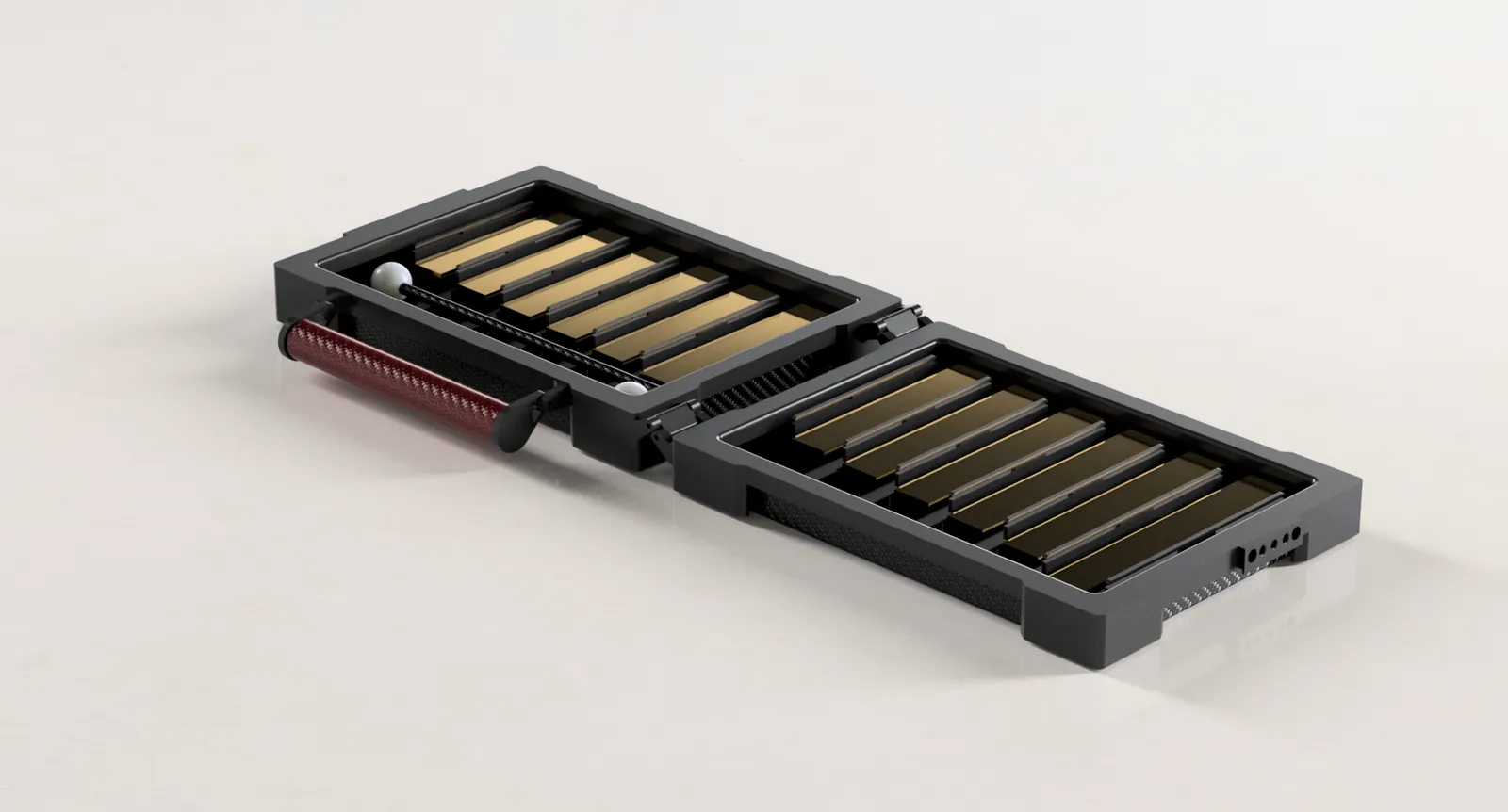
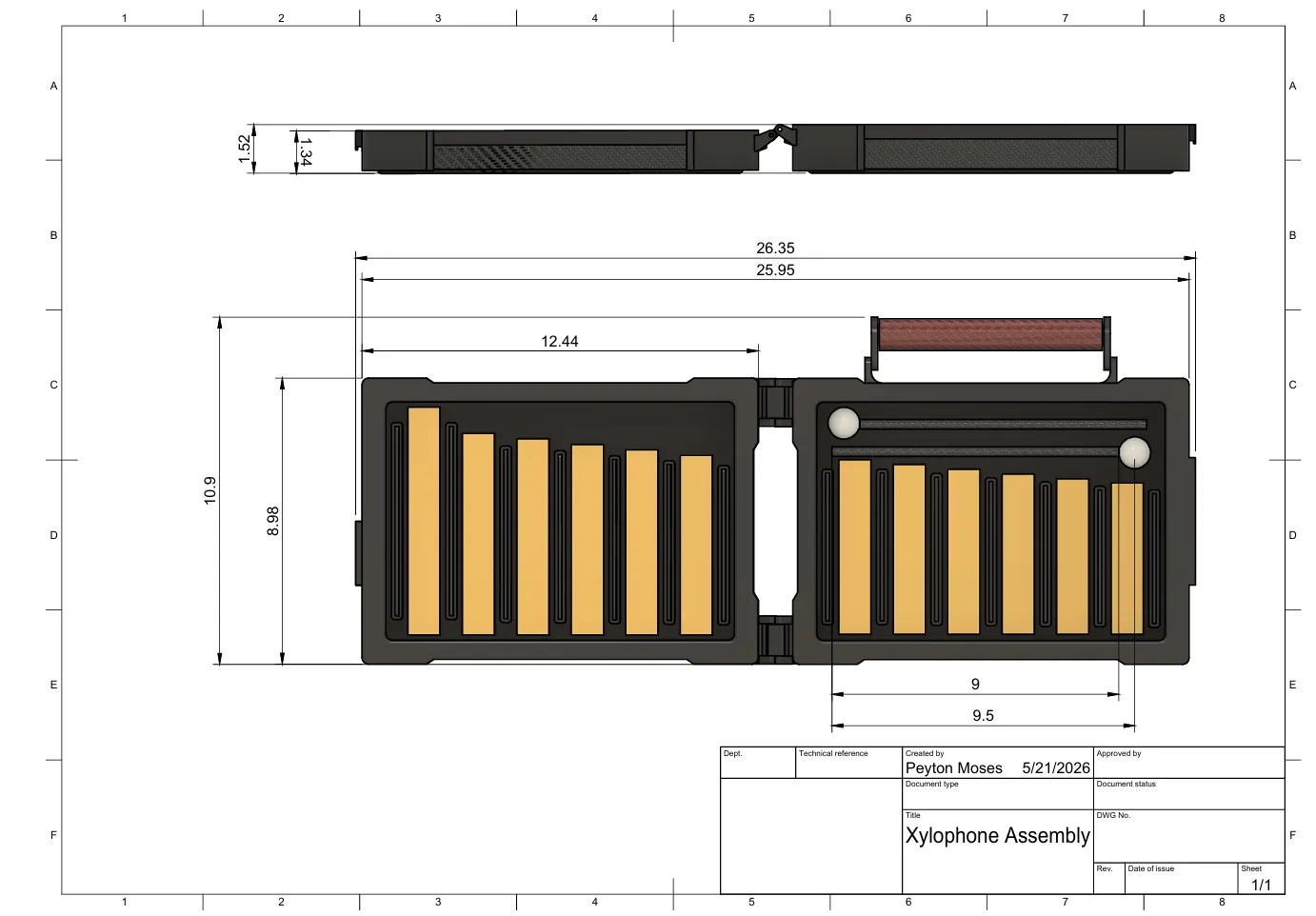
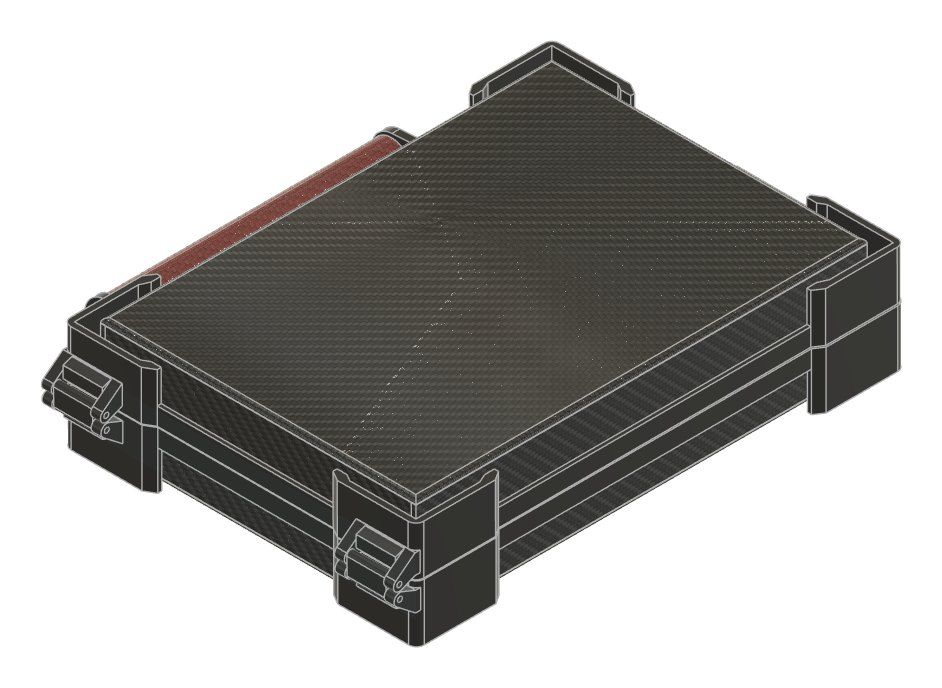
A folding chromatic xylophone for traveling musicians: a rigid carbon-fiber layup case over a 3D-printed inner frame that opens to twelve brass bars and closes to an 11 × 11 × 3 in, backpack-sized case.
- Tools
- Fusion 360, 3D printing, carbon fiber layup
- Result
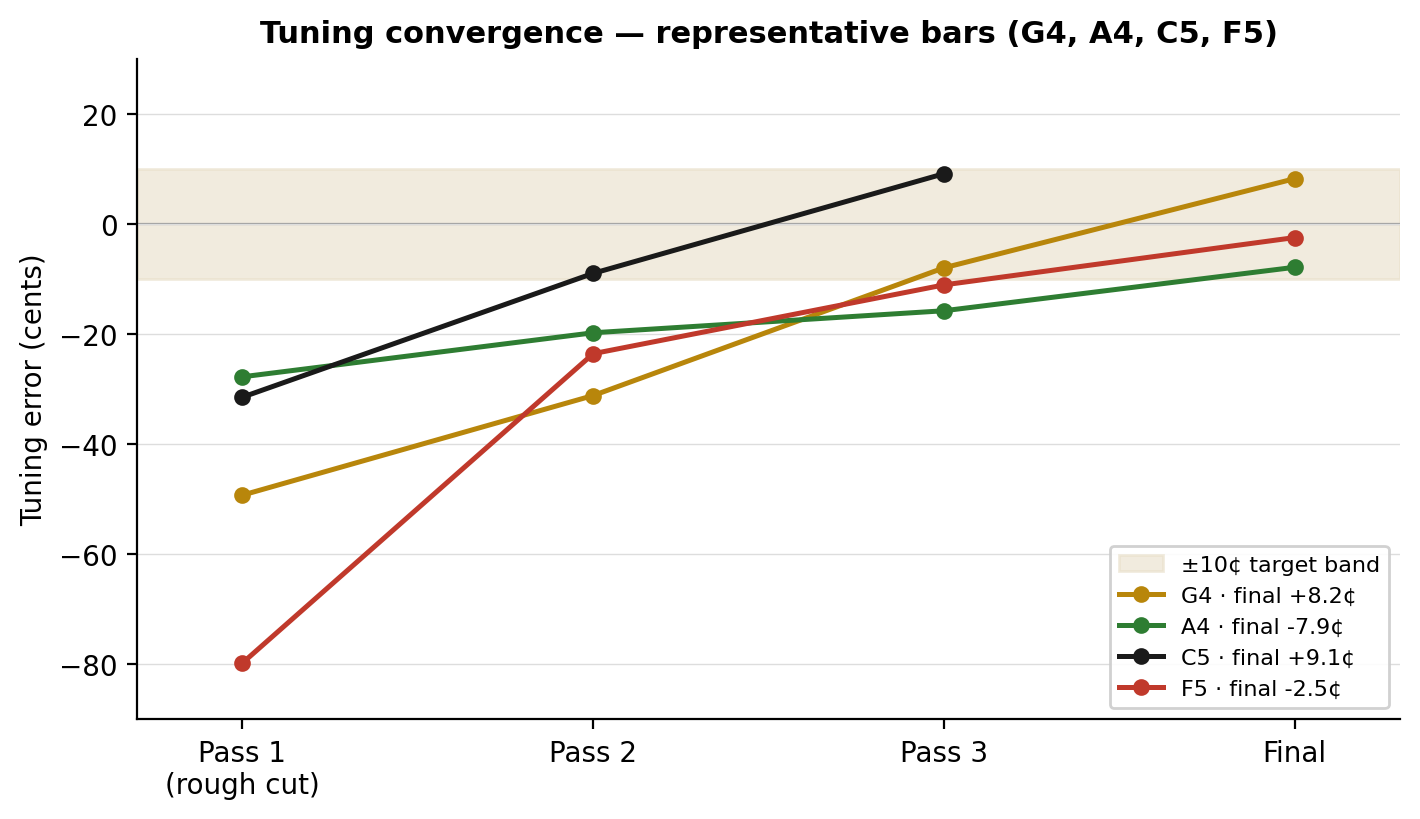
- 12 bars, G4–C#6 (1.5 octaves), all within ±10¢, under 5 lb
Overview
Students and traveling musicians we interviewed said they often skip practice because a full xylophone is impractical to carry. The goal was an instrument that fits in a backpack, stays under 5 lb, and still plays in tune.
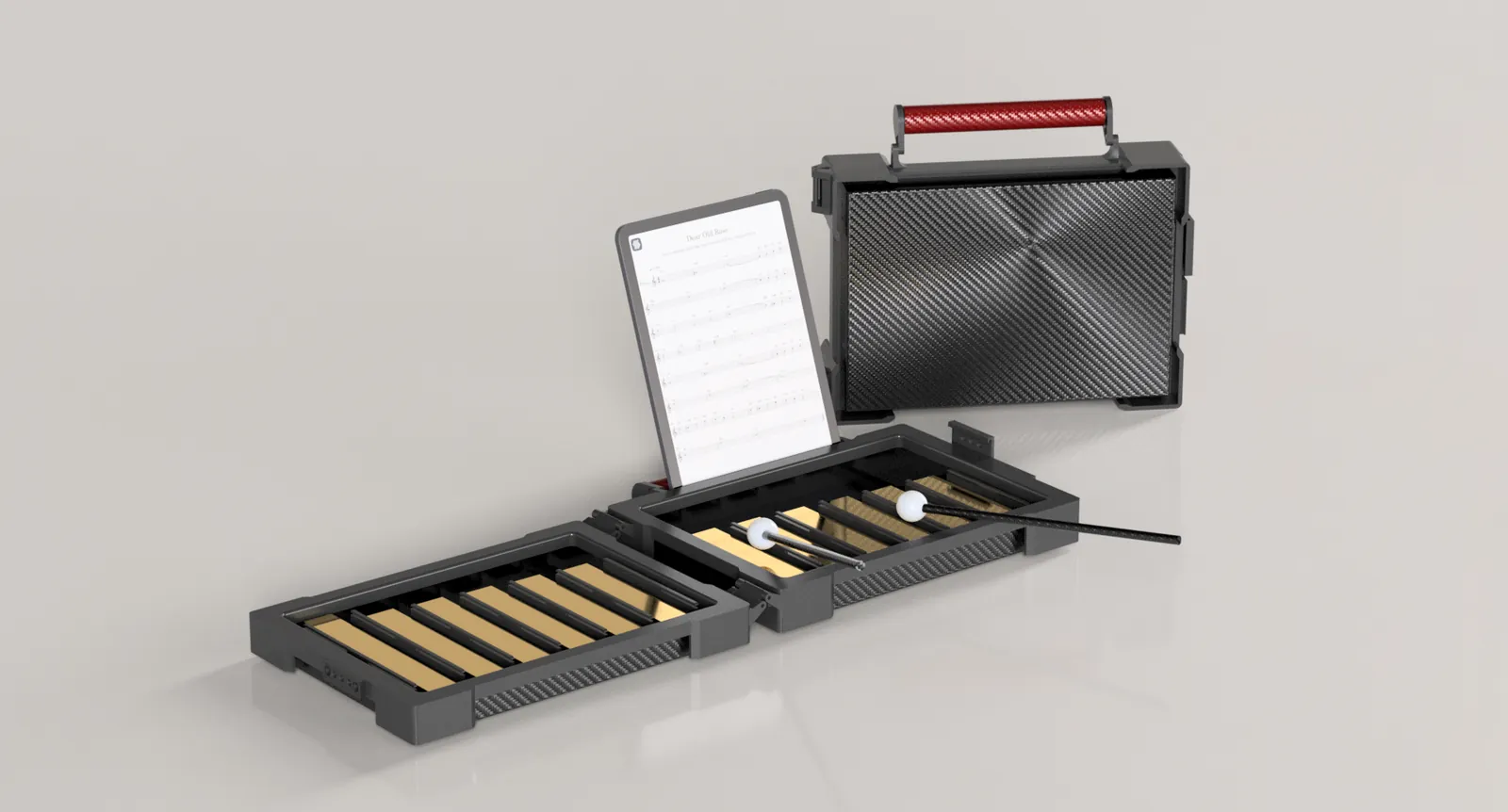
The case is a carbon-fiber layup, which keeps it rigid and improves the sound and loudness, over a 3D-printed inner frame that holds the mounts and makes parts easy to repair or replace. A magnetic latch holds it shut, and the carry handle becomes a tablet stand when it’s open.
We sized twelve salvaged brass bars with free-free Euler-Bernoulli beam theory, cut each about 3 mm long, then sanded from the ends to raise the pitch, re-measuring after every pass until each bar landed within ±10 cents. The bars sit on rubber-band mounts at their vibration nodes.