Drag to orbit
01 · 2026
Multirotor Experimental Platform
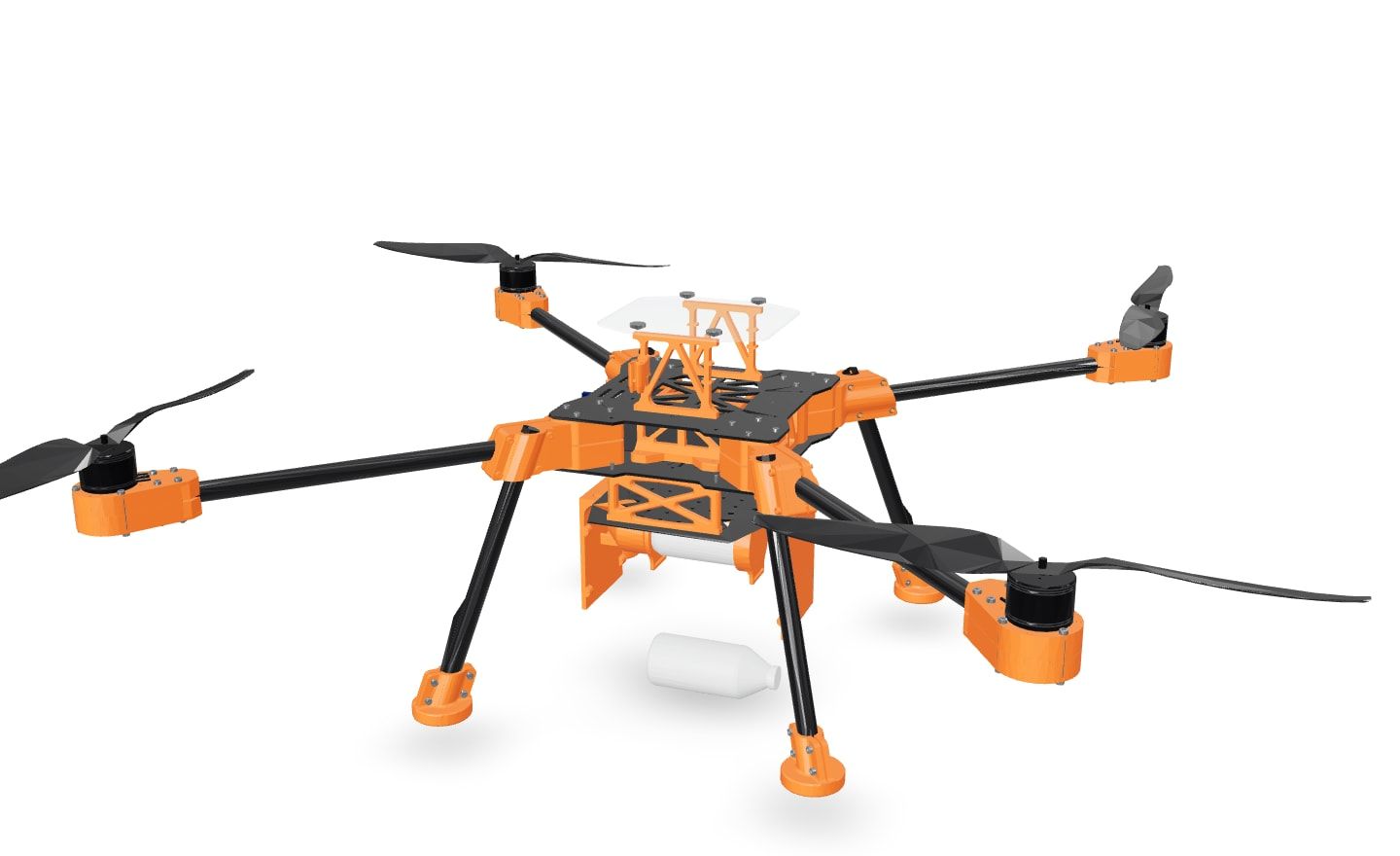
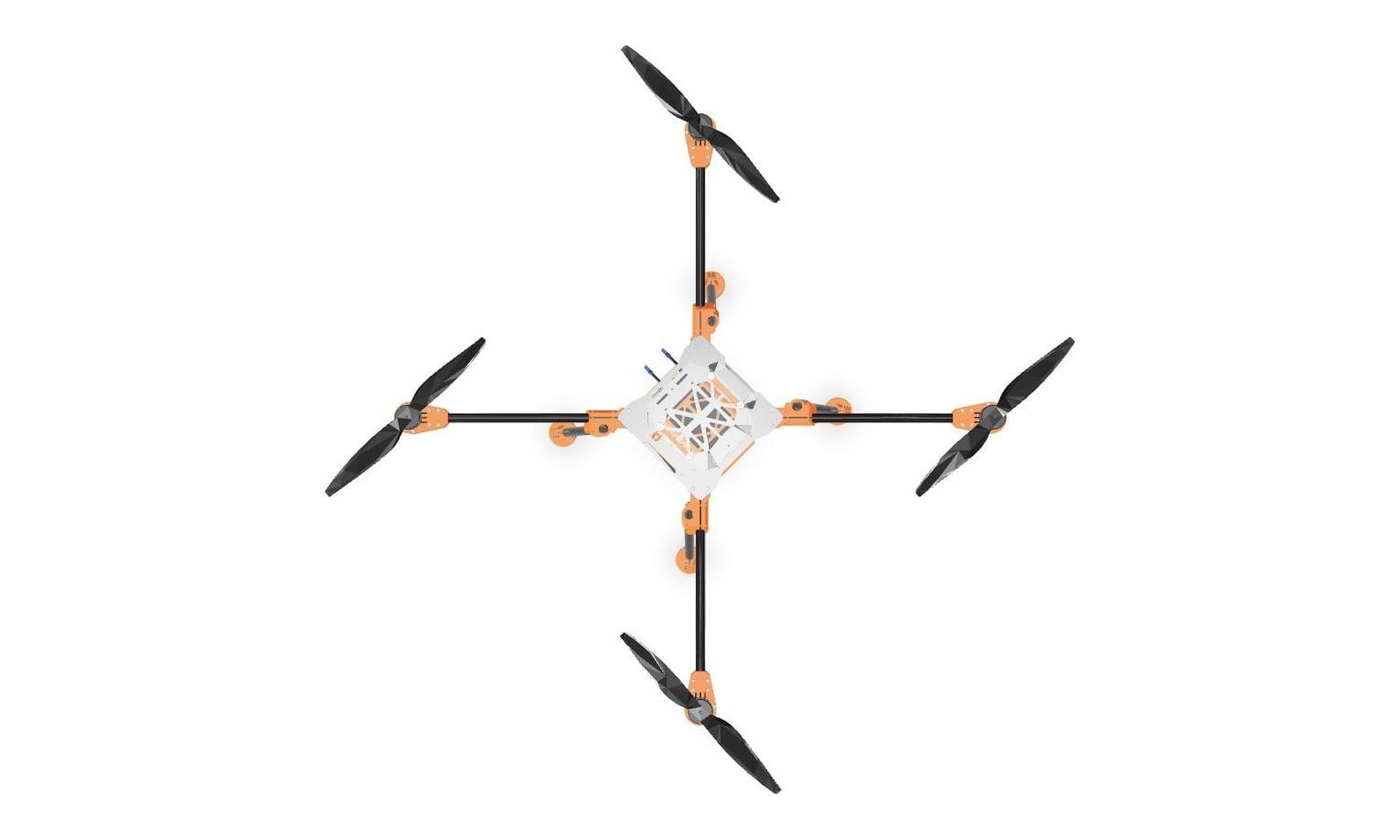
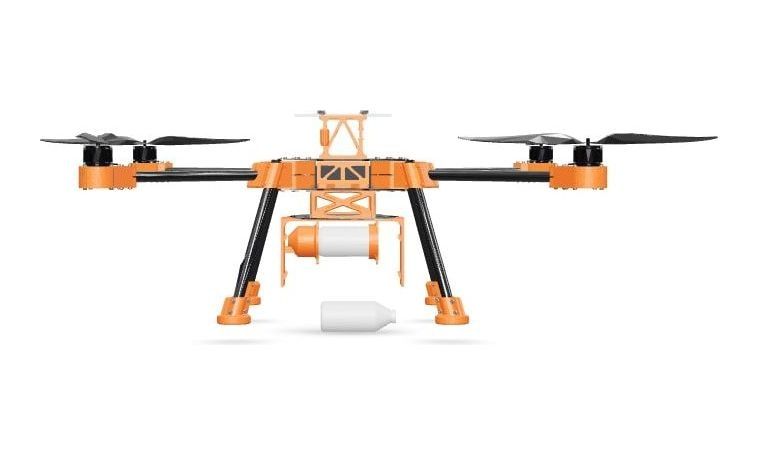
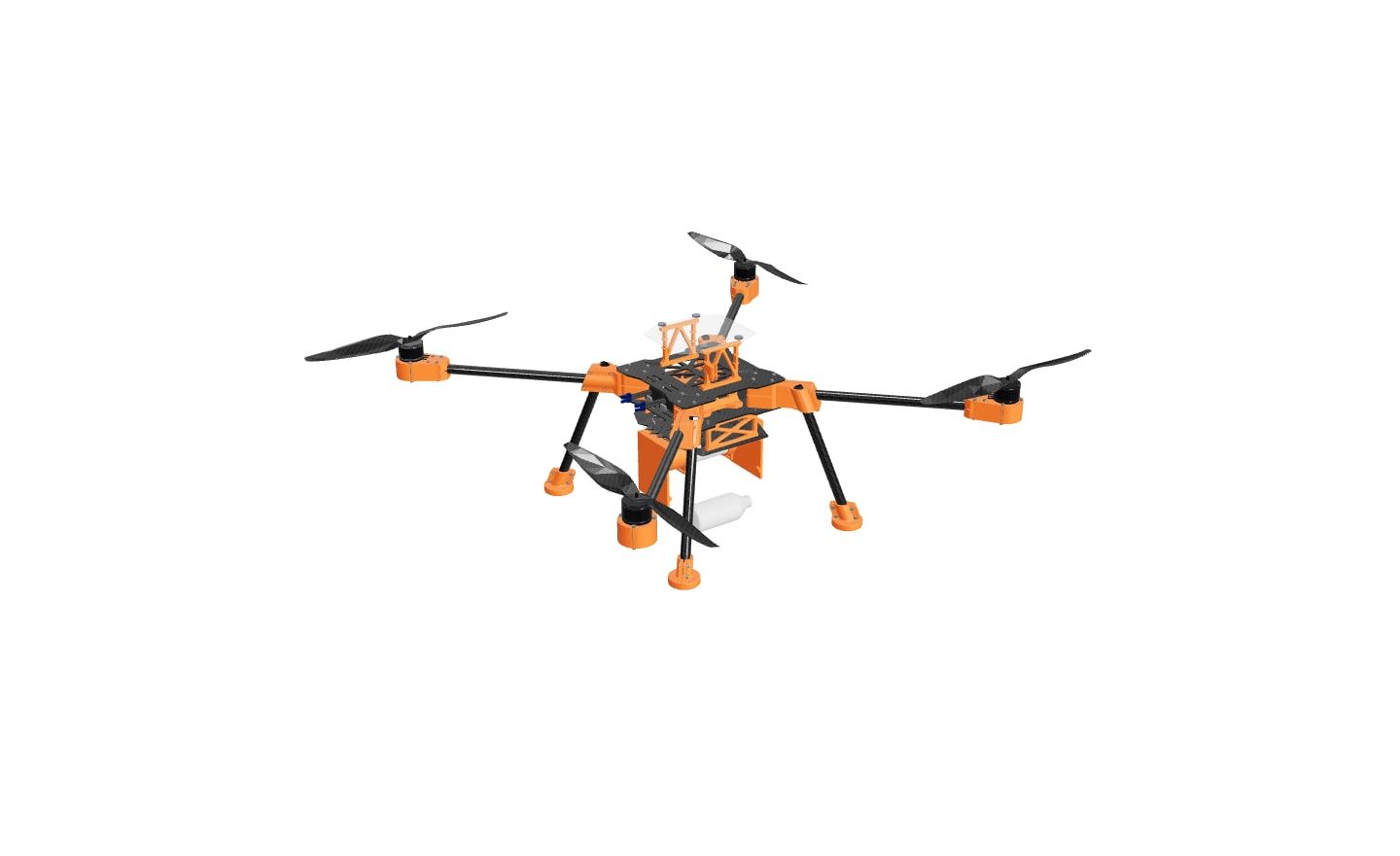
The Multirotor Experimental Platform (MEP): a quadcopter test bed for Rose-Hulman's SUAS team, designed around a tight budget, built in a few weeks from parts already in the bay, and easy to modify as the mission gets more complex.
- Tools
- Fusion 360, 3D printing, salvaged carbon and G10 plate
- Result
- A working test platform, built in a few weeks from salvaged parts
Overview
Rose Aerial Systems is Rose-Hulman’s team for the SUAS competition, where an aircraft has to map an area, find a person and a tent on the ground, and drop a water bottle and a beacon to them. The Multirotor Experimental Platform (MEP) is our test bed: it gives the programmers a real aircraft to develop and test that mission software on, and a platform for trying out hardware for the VTOL the team is building.
As Structural Lead I designed the MEP around our budget. It had to be built in a few weeks at the start of fall from what was already in the bay: carbon from crashed drones, offcuts of G10 and carbon plate for the frame plates, and motors from a drone that crashed and was taken apart long ago. The frame, Jetson and battery cages, landing gear, and payload rack are all laid out to be easy to modify as the mission gets more complex.
More from the team is on the Rose Aerial Systems YouTube channel.